The Senate hearings
A subcommittee convened in April 1954, heard what it heard, and the industry didn't wait for a verdict.
The Room That Changed the Racks
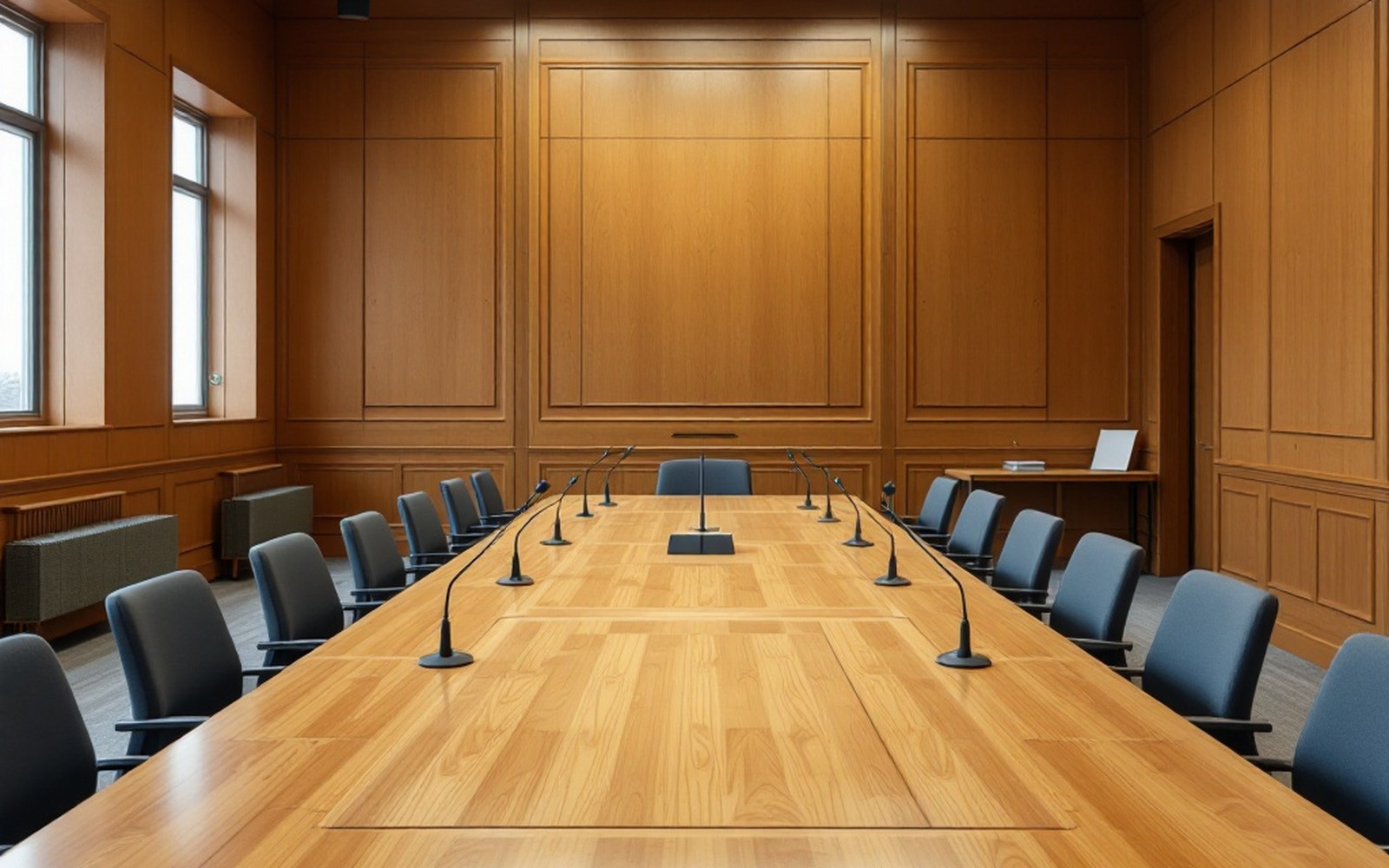
The Subcommittee on Juvenile Delinquency, sitting under the Senate Judiciary Committee, opened its hearings on comic books in New York on April 21, 1954. It was chaired by Senator Robert Hendrickson of New Jersey, with Senator Estes Kefauver of Tennessee among its members, already famous for his televised organised-crime hearings earlier in the decade, and it arrived at a moment when the industry was genuinely exposed.
Fredric Wertham had published Seduction of the Innocent that same spring. The book argued, with selective case studies, that comics caused juvenile delinquency, that crime and horror titles were the primary vectors, and that the evidence was sitting on any newsstand in America. By the time the subcommittee convened, the argument was already in the air; the hearings gave it a federal stage.
Chronology
Chronology
- April 21, 1954Subcommittee on Juvenile Delinquency opens comic book hearings in New York
- Spring 1954Wertham's Seduction of the Innocent published
- September 1954Comics Magazine Association of America formed
- Early 1955Comics Code Authority seal begins appearing on covers
- Spring 1955Subcommittee interim report released; no federal legislation recommended
- End of 1955Most EC Comics horror and crime titles discontinued
The publishers called to testify included William Gaines of EC Comics, whose line — Tales from the Crypt, Vault of Horror, Crime SuspenStories — was precisely the kind of material under scrutiny. Gaines testified on April 21, defending the content on the grounds of good taste and editorial discretion. Senators pressed him on a cover showing a severed head; Gaines held that it qualified as good taste for the genre. It was a moment the press reproduced widely, and it did the industry no favours.
The subcommittee's interim report, released in the spring of 1955, stopped short of recommending federal legislation. It found that comic books were a contributing factor to juvenile delinquency without proving direct causation, and it pointedly left the door open for the industry to regulate itself — or face something worse.
Fredric Wertham had published Seduction of the Innocent that same spring.
The Industry Reads the Room
Publishers understood the implicit bargain. The Comics Magazine Association of America was formed in September 1954, before the interim report even arrived, and the Comics Code Authority began operating almost immediately. The Code — written by the industry, for the industry — was designed to be visibly rigorous: no excessive violence, no corrupt authority figures, no sympathetic criminals, no horror or terror in titles. The seal appeared on covers from early 1955.
The speed matters. Publishers did not wait for legislation because they had watched Kefauver's organised-crime hearings produce exactly the kind of sustained negative coverage that damaged industries without needing a single new law. Self-regulation was damage control dressed as responsibility.
The immediate commercial casualty was EC Comics. Gaines's distributor began dropping titles in the months after the hearings, and most of the EC horror and crime line was dead by the end of 1955. The one survivor was Mad, restructured as a magazine — a format move that placed it outside the Code's jurisdiction entirely, since the Code applied to comic books, not to periodicals sold as magazines.
What the hearings did not do is sometimes as instructive as what they did. No federal censorship law passed. The Code was private, voluntary in formal terms, and enforceable only because distributors and newsstands declined to carry titles without the seal. That leverage — a wholesaler's preference translated into a de facto industry standard — was the real mechanism. The subcommittee provided the political pressure that made the leverage credible.
On the record
Who decides what
- 01Senate Subcommittee on Juvenile Delinquency — congressional pressure, no binding law
- 02Comics Magazine Association of America — trade body that wrote and administered the Code
- 03Comics Code Authority — the enforcement arm; issued or withheld the cover seal
- 04Distributors and newsstands — the actual leverage point; refused titles without the seal
The 1954 hearings are often narrated as a moral panic imposed from outside. The fuller picture is of an industry calculating its interests under political heat. The Comics Code Authority was a trade organisation's solution to a trade organisation's problem: how to keep the racks open and the legislators quiet, simultaneously. That it also reshaped what American comics could say, and for how long, is a separate consequence — but it followed directly from what happened in those New York hearing rooms across the days of hearings in New York in 1954.
Named in this entry
People and houses
Psychiatrist, 1895–1981
Fredric Wertham
His 1954 book Seduction of the Innocent argued that comics were harming children, and it reached a legislature rather than a journal.
Publisher, 1922–1992
William Gaines
Ran EC Comics, defended his covers at the 1954 hearings, and kept Mad alive by converting it to magazine format.
Senator, 1903–1963
Estes Kefauver
Sat on the Senate subcommittee that took evidence on comics and juvenile delinquency in 1954.